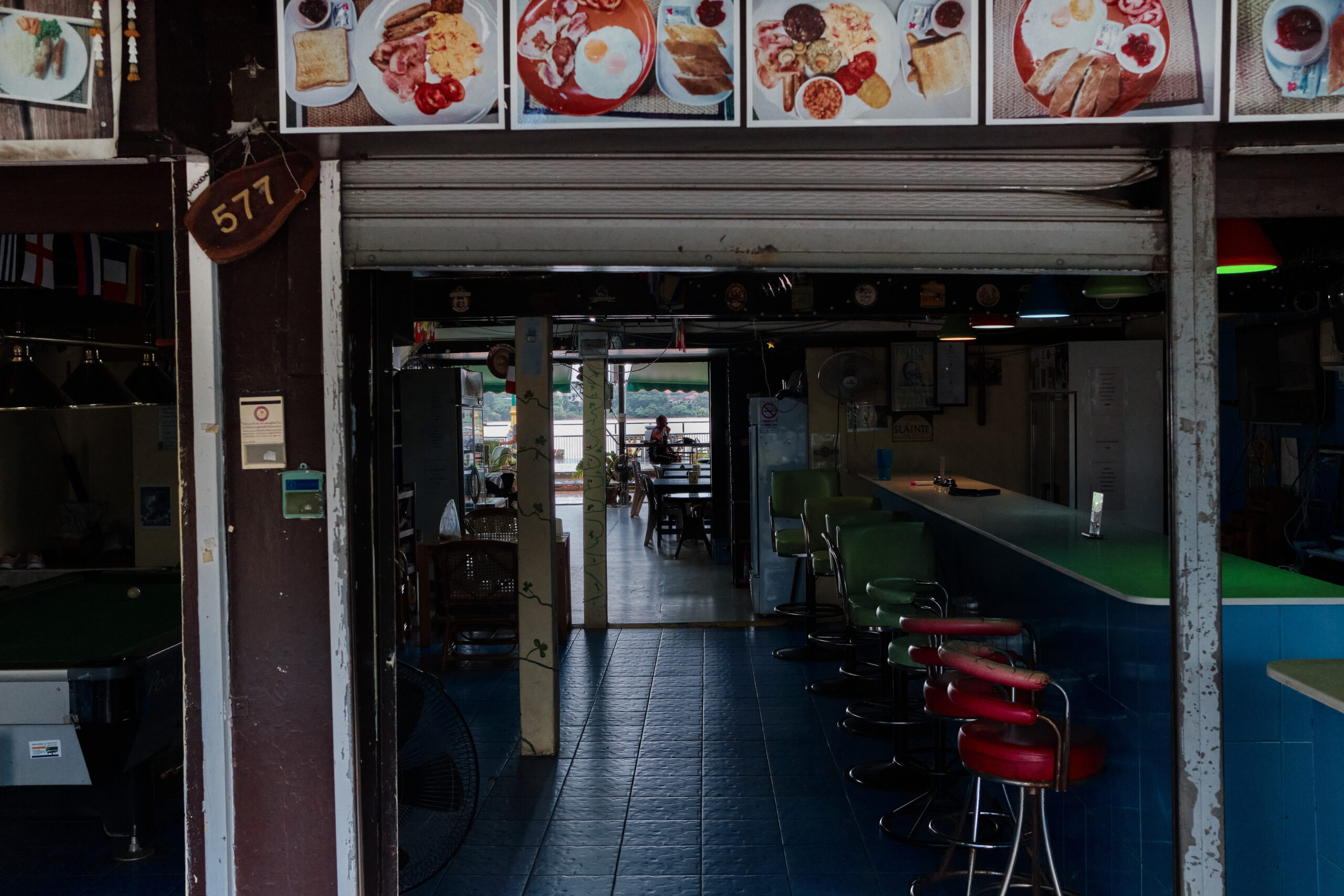
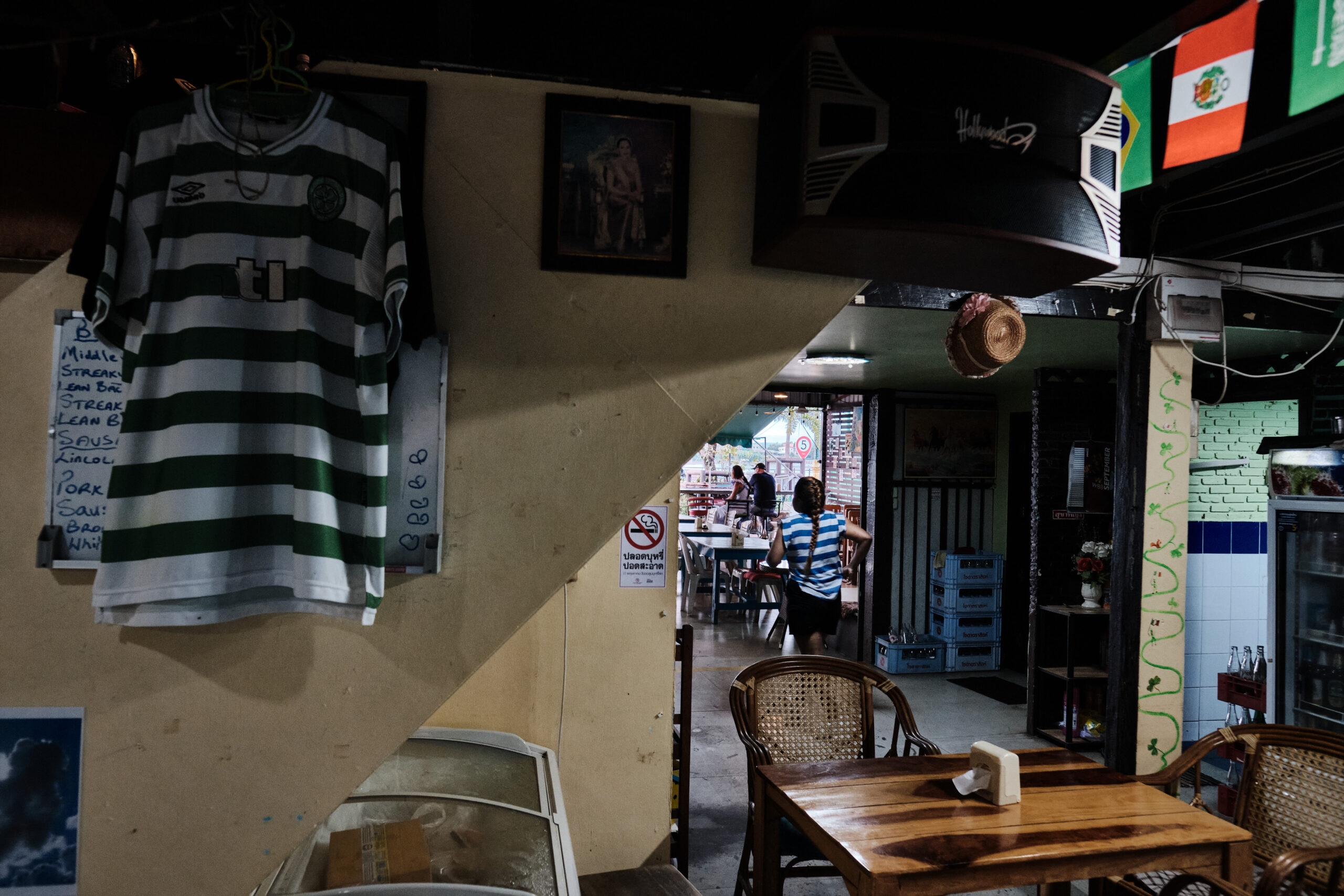
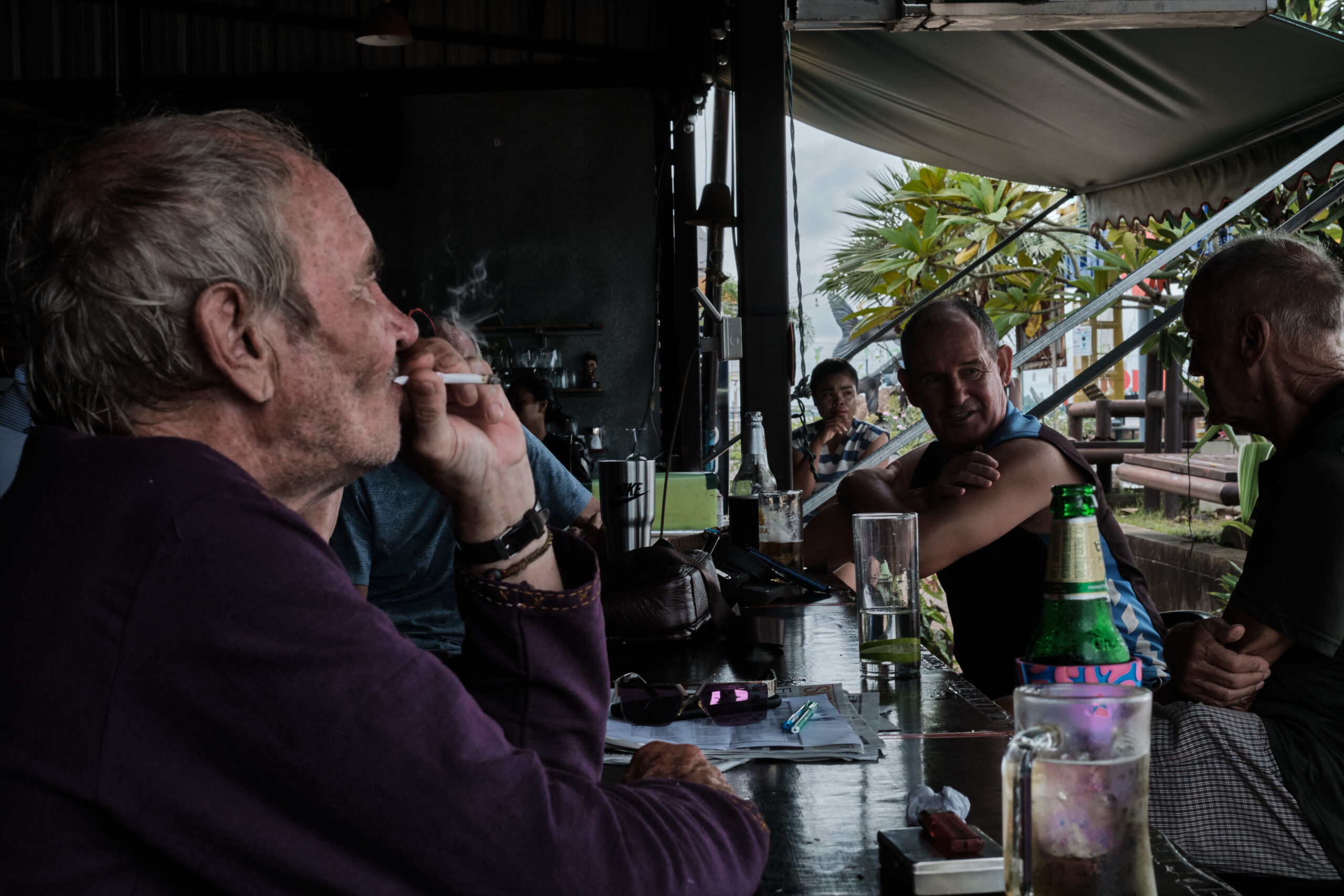
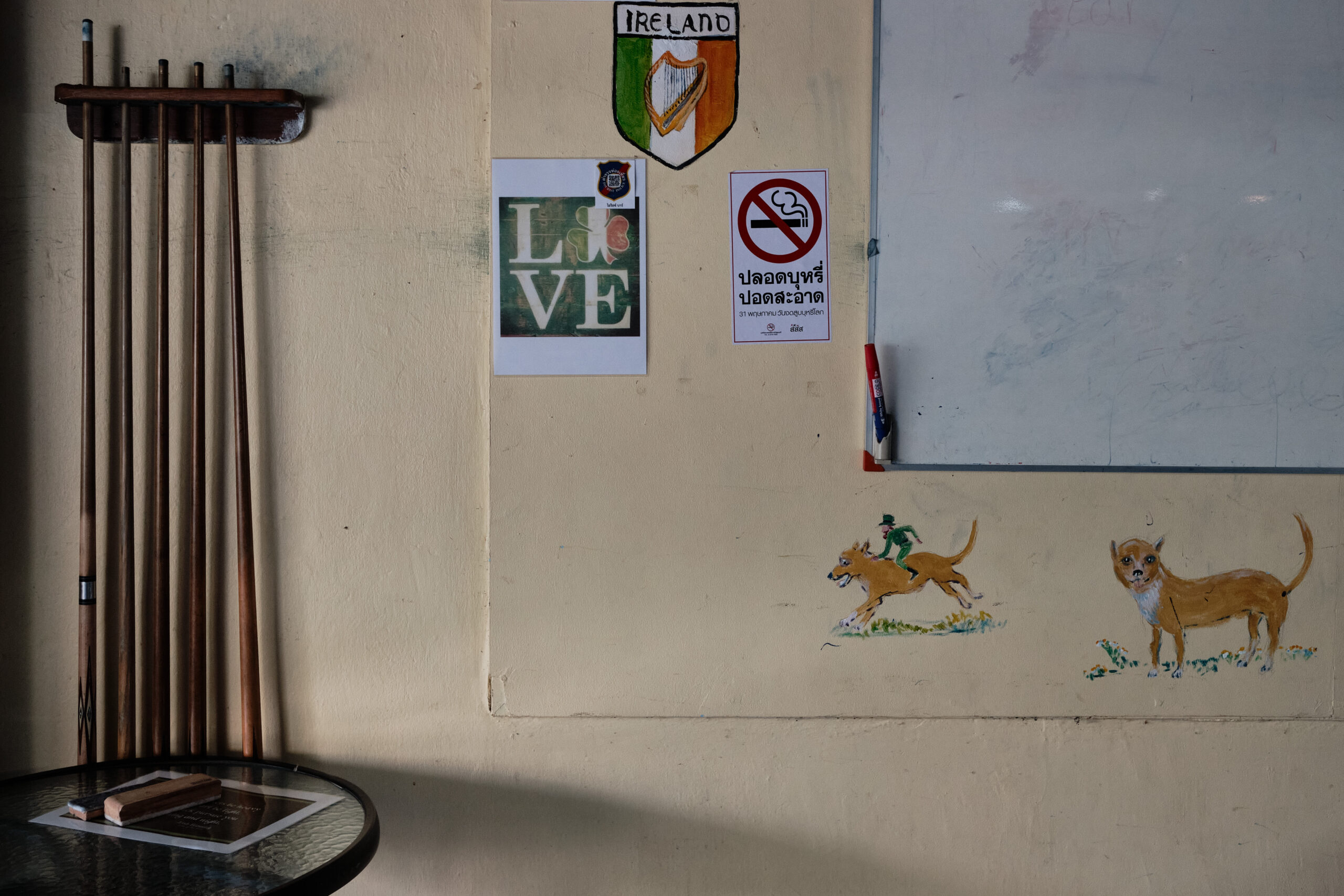
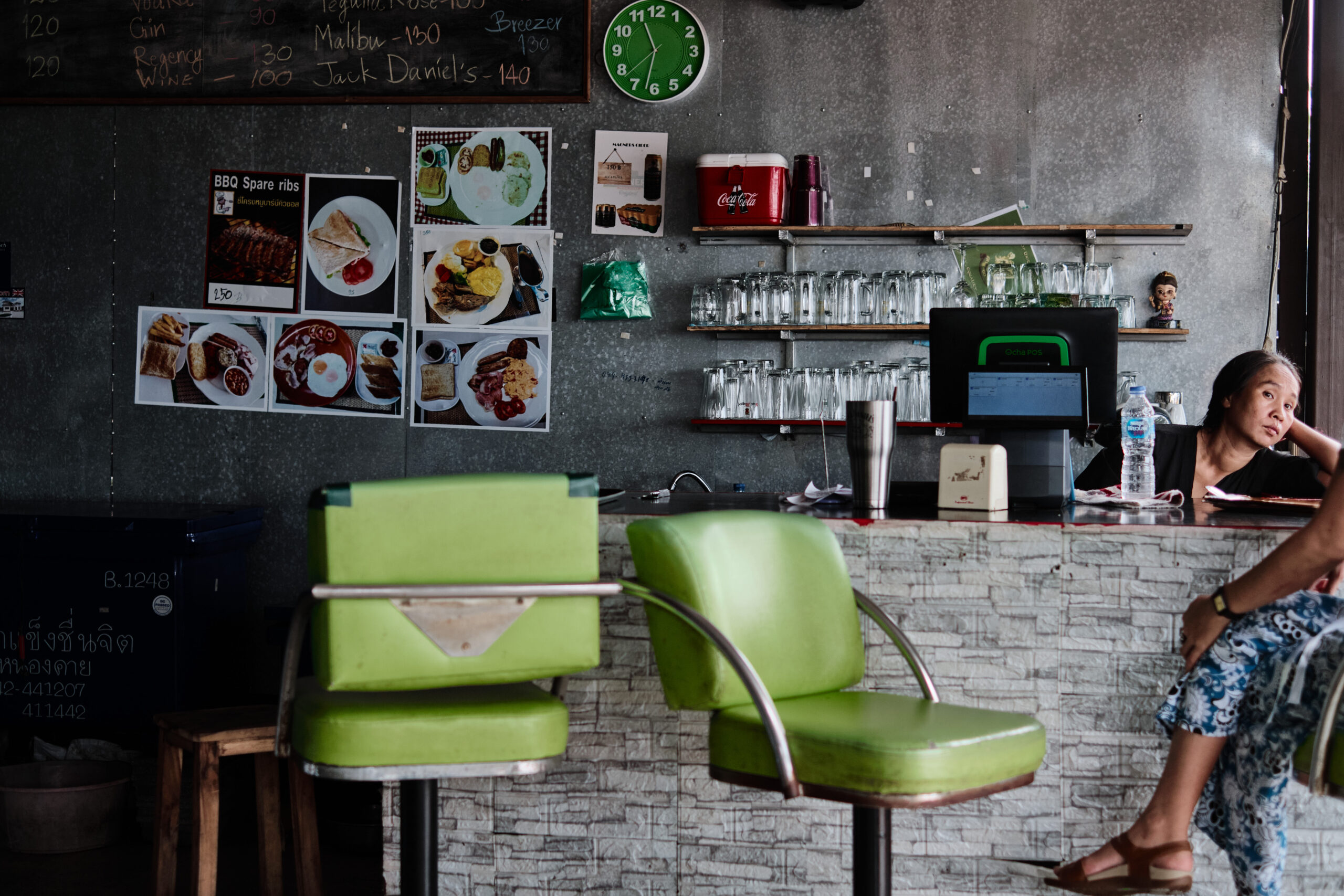
In the border town of Nong Khai, overlooking the slow and hypnotic flow of the Mekong, a small community of Western men gathers every day inside an Irish pub. Most are between sixty and seventy-five years old—British, Irish, Australian—drawn to Thailand after retirement by a lower cost of living, warmer climate, and the promise of a late-life freedom. What unfolds here is a second transition: after leaving work, migration reshapes identity, time, and belonging.
Daily life follows a parallel rhythm. Mornings are spent navigating bureaucracy—visas, bank transfers, insurance policies—while afternoons stretch into isolation or quiet routines. Evenings, instead, fill with long conversations where humour masks uncertainty. The pub becomes a third place: neither home nor institution, but a refuge where nostalgia, irony, and fear coexist.
Economic sustainability lies at the core of this choice. For many, modest pensions stretch further in Southeast Asia, yet this stability remains fragile. British state pensions frozen abroad lose value over time; exchange rates fluctuate; welfare protections are absent. Healthcare, entirely dependent on private insurance, becomes increasingly uncertain with age, rising costs, and exclusions for pre-existing conditions. Many adopt hybrid strategies—basic coverage combined with personal savings—aware that when reserves run out, options narrow quickly.
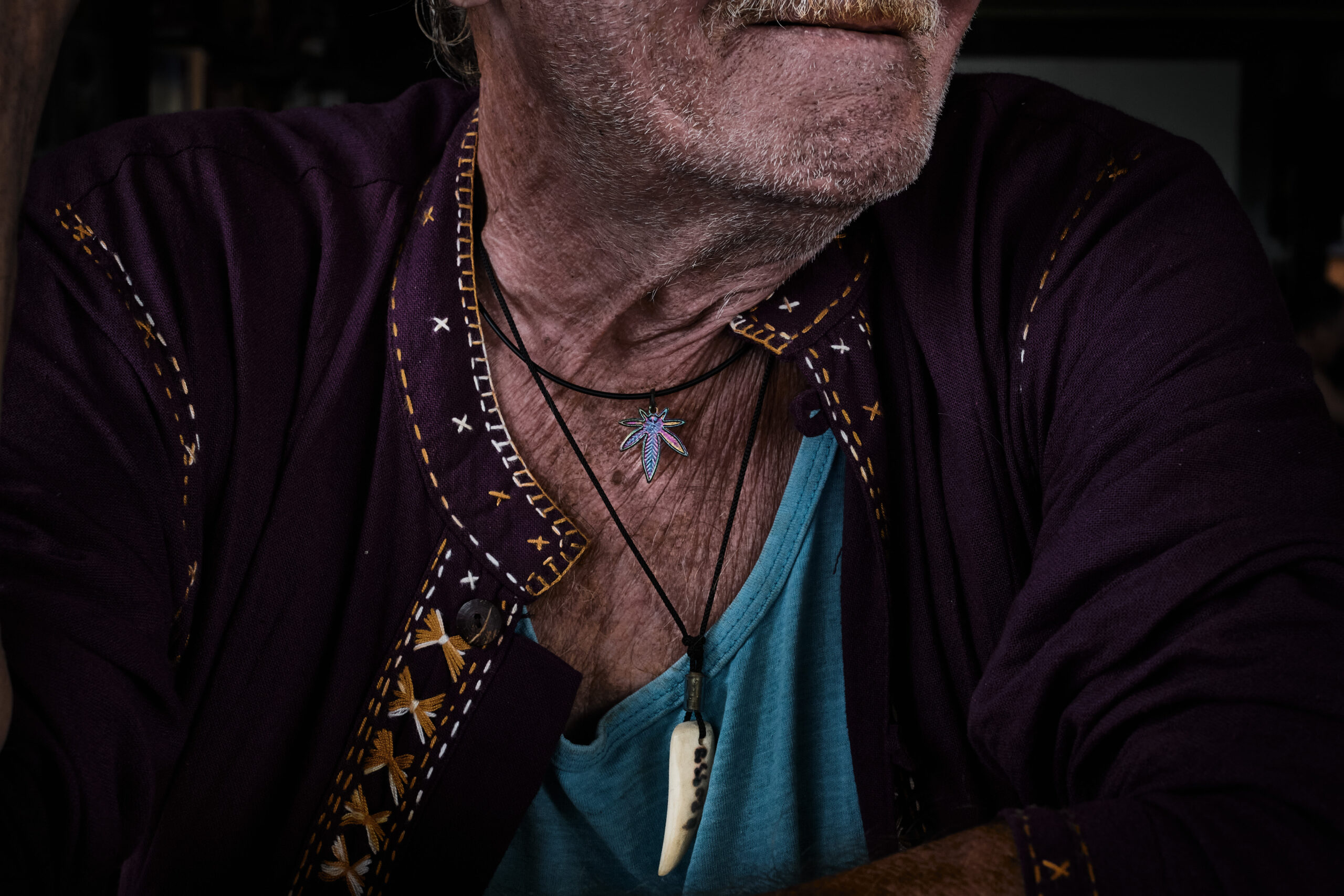
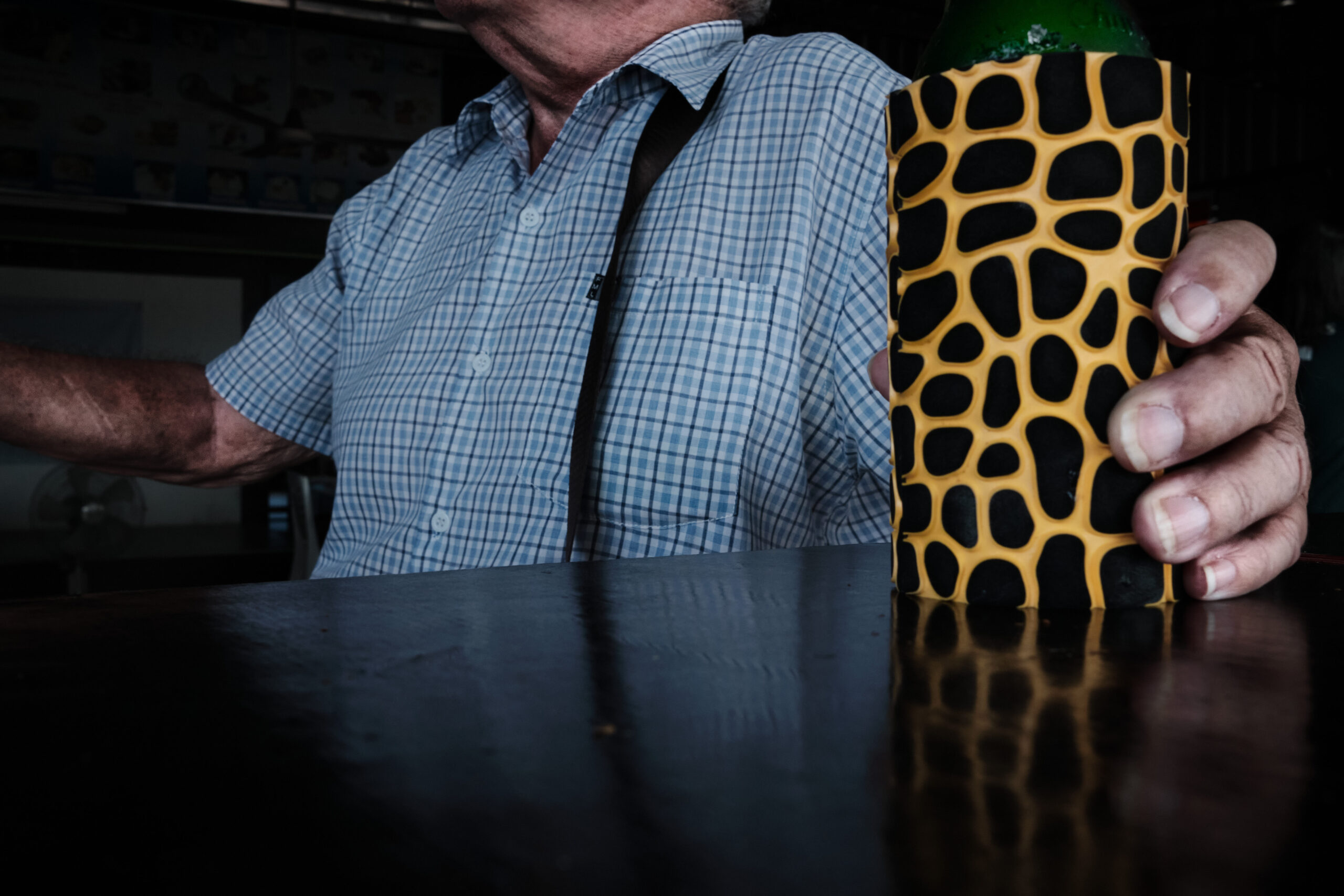
Masculinity in this space is not performative but layered. Men who have left families, marriages, or routines behind rebuild a low-threshold community based on presence rather than emotional disclosure. Jokes, advice, and shared rituals replace long-term plans. Between the desire to stay and the awareness of impermanence, Nong Khai becomes a waiting room of sorts—where ageing, migration, and care quietly intersect, night after night, at the same counter.