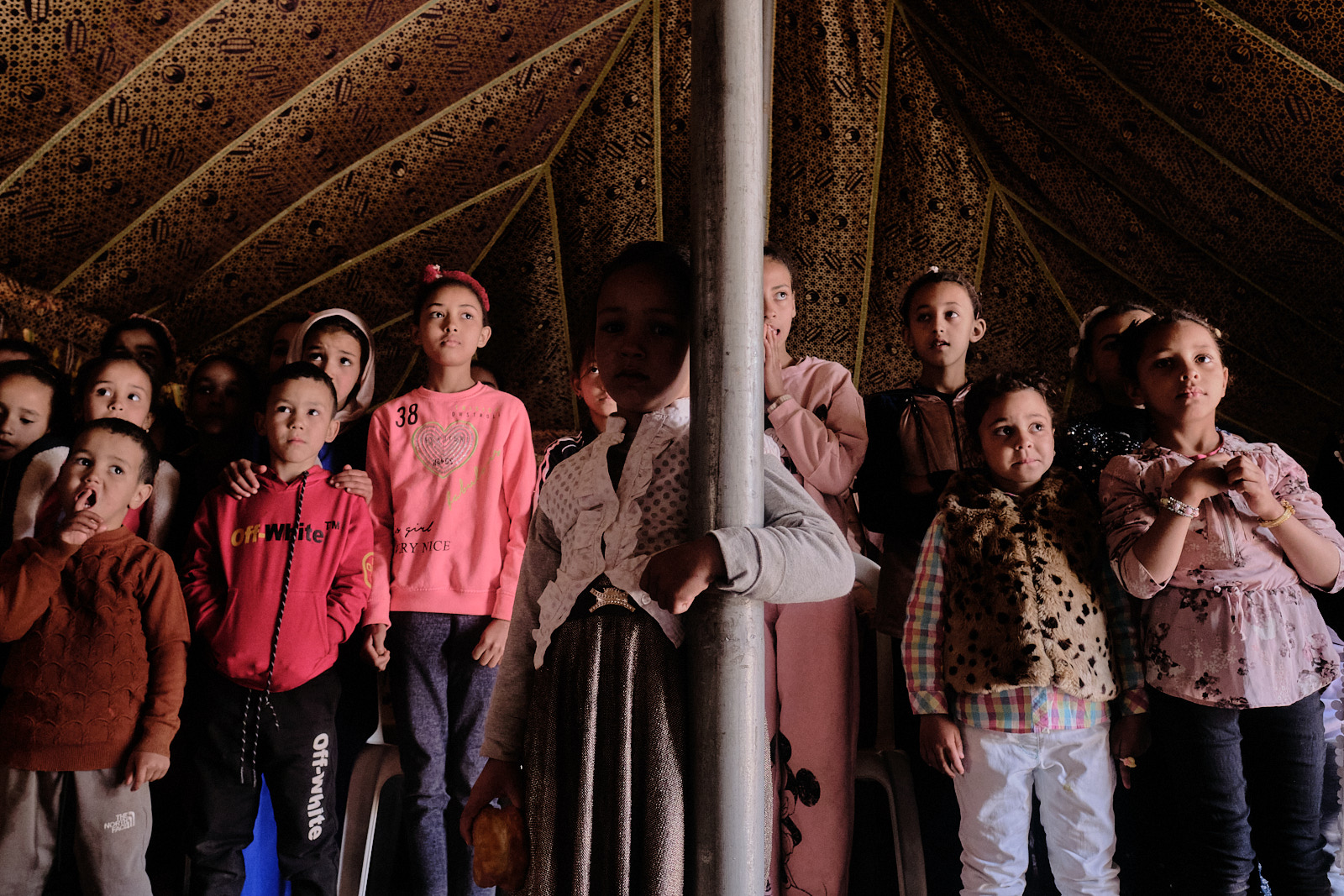
One of India’s largest Adivasi communities, the Bhil, are at the centre of a growing political and cultural movement demanding the creation of Bhil Pradesh: a tribal region that would unite Bhil-majority districts across Rajasthan, Madhya Pradesh, Gujarat, and Maharashtra. Rooted in land, identity, and spiritual belonging, this mobilisation represents a rare moment of grassroots assertion, challenging decades of state neglect and the pressures of religious and cultural assimilation. The Bhil are one of the largest indigenous communities in India, with an estimated population of over 16 million people. Historically inhabiting the forested and hilly regions of central and western India, they have developed social systems, belief structures, and subsistence practices deeply intertwined with land, forests, and seasonal cycles. Their cultural identity is rooted in ancestral worship and animist traditions, forming a worldview that differs markedly from dominant caste Hindu society and underpins contemporary claims for political, cultural, and territorial autonomy. This mobilisation reached a decisive moment in July 2024, when more than 100,000 Bhil gathered at Mangarh Dham, a site of profound historical and symbolic significance for Adivasi communities. The gathering transformed a place long associated with colonial-era violence and memory into a contemporary political space, consolidating Bhil Pradesh as a shared horizon rather than a marginal demand, and signalling the movement’s capacity to mobilise across state boundaries.
The demand for Bhil Pradesh has been politically articulated by the Bharat Adivasi Party (BAP), founded in 2023 and rapidly gaining support in tribal constituencies. Rather than framing the movement solely in administrative terms, the party has used Bhil Pradesh to foreground Adivasi rights and to assert clear cultural and spiritual distinctions from the Hindu nationalist framework promoted by mainstream parties. As BAP leader Rajkumar Roat has stated, “Our gods are different, our traditions are different, our way of life is different.” In this sense, Bhil Pradesh functions not only as a territorial claim, but as a refusal of cultural homogenisation and religious assimilation.
Within this broader assertion, everyday cultural practices have also become sites of resistance. Bhil women, in particular, have challenged norms historically imposed by dominant caste societies, such as the veil, which does not belong to Bhil cultural heritage and was explicitly rejected by women speakers during the Mangarh Dham gathering. Alongside this, the right to education, especially for women, has emerged as a central concern, linking cultural autonomy to access, dignity, and long-term self-determination.
Over the past decades, large areas of central India have been reshaped by infrastructure and development projects that have profoundly affected tribal regions. In districts such as Dhar, in Madhya Pradesh, the construction of dams, roads, industrial facilities, and protected areas has led to land expropriation, village submergence, and the displacement of entire Bhil communities. Although legislation such as the Forest Rights Act was intended to recognise tribal claims over land and forests, its implementation remains uneven and frequently obstructed. Within this gap between law and practice, indigenous assertion is repeatedly framed as a security issue rather than a rights-based claim. This framing is reinforced by persistent stereotypes—rooted in colonial classifications of Bhils as a “criminal tribe”—that continue to shape institutional responses, surveillance practices, and the policing of indigenous political mobilisation.
The rise of the BAP has altered the political equation in tribal regions, forcing India’s major parties to recalibrate their strategies. Welfare-oriented approaches promoted by the Bharatiya Janata Party are increasingly perceived by many Bhil as insufficient to address structural issues such as land control, discrimination, and education. At the same time, the Congress, historically influential among tribal voters, has struggled to respond coherently to renewed Adivasi demands. In this shifting landscape, Bhil Pradesh is read in contrasting ways: as a legitimate claim for autonomy by some, and as a disruptive or divisive narrative by others. While the creation of a new Indian state remains procedurally complex, what underpins the movement is a shared experience of everyday exclusion that predates party allegiances and continues to fuel the demand for self-determination.